
Design Your Retaining Wall Like a Pro
Your backyard slopes toward your house, and every heavy rain turns your foundation into a swimming pool. Or maybe you’re watching topsoil wash away from your carefully planted garden beds, taking your time and investment with it. These frustrations signal that your landscape needs more than cosmetic fixes—it needs a properly designed retaining wall that actually works. At Accurate Lawn Leveling, we’ve spent years helping homeowners transform problematic slopes into functional, attractive outdoor spaces, and we’ve learned that successful retaining wall projects start with smart design decisions made long before the first stone gets placed.
The difference between a retaining wall that lasts decades and one that fails within years often comes down to choices made during the planning phase. While the appeal of quick DIY solutions is understandable, the engineering principles behind effective retaining walls require careful consideration of soil composition, water management, and structural integrity. Your landscape deserves a solution that addresses not just what you see on the surface, but what’s happening beneath it.
Understanding Your Landscape’s Needs
Every property has unique characteristics that influence retaining wall design. The first step involves assessing the height and grade of your slope. Walls under four feet typically require less complex engineering, while taller structures need professional evaluation to ensure they can handle the lateral pressure from soil and water. Your soil type matters enormously—clay-heavy soil expands when wet and contracts when dry, creating movement that can compromise wall stability over time. Sandy soil drains better but may require different reinforcement strategies.
The purpose of your retaining wall also shapes design decisions. Are you creating terraced planting areas, protecting a foundation, or simply preventing erosion? Each goal requires different approaches to height, materials, and placement. A wall meant to support a future patio needs different load-bearing calculations than one designed purely for erosion control.
Choosing Materials That Match Your Vision and Budget
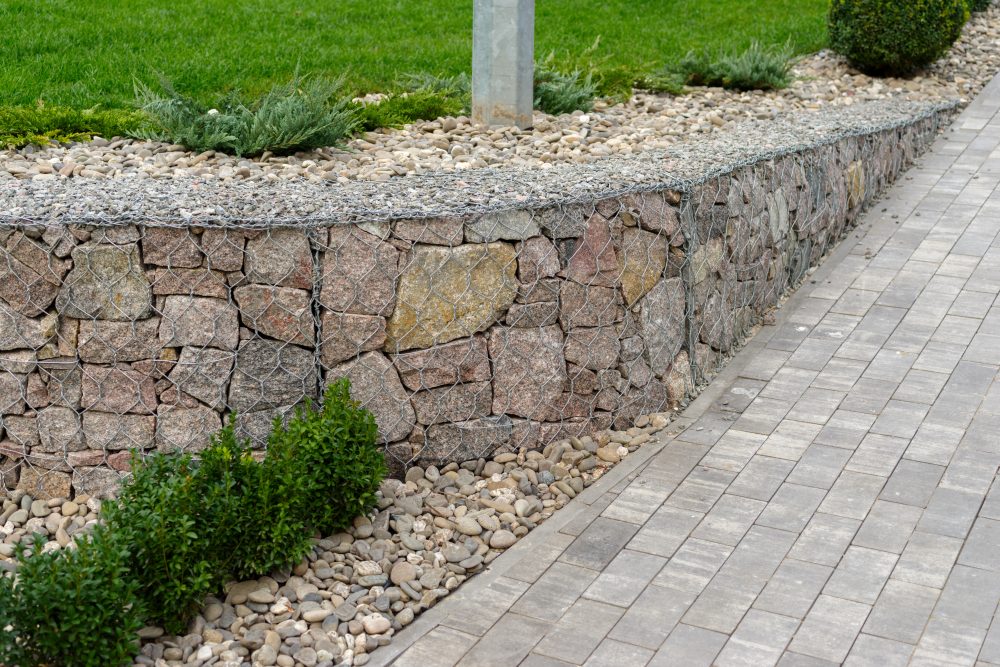
Material selection goes beyond aesthetics, though appearance certainly matters when you’re investing in permanent landscape features. Natural stone offers timeless beauty and exceptional durability, with each piece contributing unique character to your wall. The irregular shapes interlock naturally, creating strength through their very irregularity. Concrete blocks provide consistent dimensions that simplify installation while offering various textures and colors that complement different architectural styles.
Timber retaining walls work beautifully in certain applications, particularly for shorter walls in garden settings, though they typically have shorter lifespans than stone or concrete options. The key is matching your material choice to your wall’s height, the soil conditions it will face, and your long-term maintenance preferences. A well-designed retaining wall using modest materials will always outperform an expensive wall built without proper planning.
Mastering Drainage: The Make-or-Break Factor
Water is simultaneously your retaining wall’s greatest challenge and the most commonly overlooked aspect of design. When water accumulates behind a retaining wall, it creates hydrostatic pressure that can bow, crack, or even topple the structure. Proper drainage begins with a gravel backfill layer that allows water to filter down rather than press against the wall face.
Perforated drainage pipe installed at the base directs water laterally to designated exit points, preventing buildup behind the wall. Some designs incorporate weep holes—small gaps in the wall face that allow water to escape—though these need strategic placement to avoid soil erosion. The grading around your retaining wall should direct surface water away from the structure rather than channeling it toward the wall, where it can saturate the soil and increase pressure.
Building Your Foundation for Success
A retaining wall is only as stable as its foundation. The base should extend below the frost line in cold climates to prevent heaving from freeze-thaw cycles. Even in moderate climates, a properly compacted gravel base provides the level, stable platform that prevents settling and ensures each subsequent course remains true.
The wall should tilt slightly backward into the slope—typically about one inch for every twelve inches of height. This backward lean, called batter, helps the wall resist soil pressure naturally by directing force down into the foundation rather than pushing the wall forward. Some modular systems build this angle into their design, while traditional stone walls require careful placement to achieve the proper batter.
When to Call in Professional Expertise
Certain retaining wall projects need professional engineering regardless of your DIY skills. Any wall over four feet tall typically requires permits and engineered plans that account for soil bearing capacity, surcharge loads from structures or slopes above, and seismic considerations where applicable. Walls near property lines need precise placement to avoid encroachment issues, and walls supporting structures like patios or driveways require calculations that factor in additional weight loads.
Professional installation also makes sense when your timeline matters. What might take weeks of weekend work can often be completed in days by experienced crews with proper equipment. The investment in professional design and installation pays dividends through decades of reliable performance.
Creating Landscape Integration
The most successful retaining walls don’t look like afterthoughts—they appear as intentional features that enhance your overall landscape design. Consider how planting areas at different elevations can create visual interest while serving practical purposes. Cascading plants that spill over wall edges soften hard lines and blend structure with nature.
Lighting integrated into or near your retaining wall extends its visual impact into evening hours while improving safety on terraced areas. Steps built into retaining wall systems provide access between levels without compromising structural integrity. These thoughtful touches transform a functional necessity into a landscape feature you genuinely appreciate.
Your landscape challenges don’t have to remain permanent frustrations. With proper retaining wall design that addresses your property’s specific conditions, you can create outdoor spaces that look beautiful and function flawlessly for decades to come. Accurate Lawn Leveling brings the expertise and attention to detail that turn drainage problems and erosion concerns into opportunities for landscape transformation. We’d love to discuss how a well-designed retaining wall can solve your property’s challenges—reach out today for a consultation that starts your project on solid ground.