
How to Maintain Your Retaining Wall and Make It Last
A retaining wall is one of the hardest-working structures on your property. It holds back soil, manages water drainage, and adds real visual structure to your landscape. But like any investment, it only performs well when it receives the right care. At Accurate Lawn Leveling, we have spent years helping homeowners build walls that stand the test of time, and we know firsthand that proper maintenance is what separates a wall that lasts decades from one that starts showing problems after a single rainy season.
The good news is that maintaining a retaining wall does not require professional intervention every few months. With a basic understanding of what to look for and a consistent seasonal routine, most homeowners can keep their walls in excellent condition on their own. The key is knowing where problems start, what warning signs to take seriously, and how to address small issues before they become expensive repairs.
Understanding a little about how retaining walls work makes maintenance far less intimidating. These structures are constantly managing pressure, specifically the lateral pressure of soil pushing against them and the hydraulic pressure of water moving through or behind them. Most retaining wall failures can be traced back to one of these two forces being underestimated or ignored over time. Keeping that in mind shapes everything about how you should inspect and care for your wall.
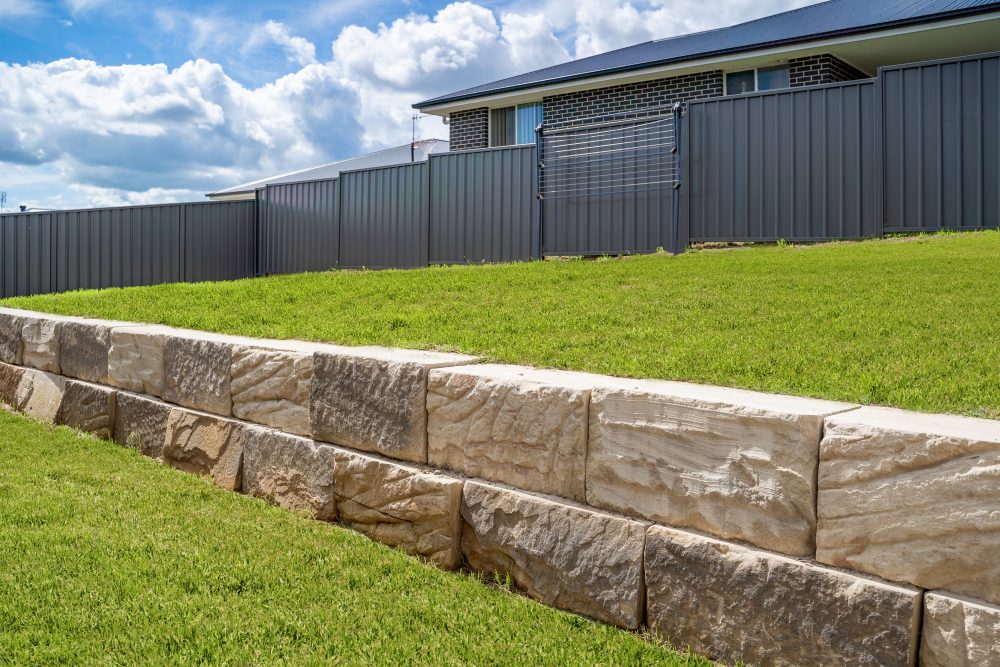
Seasonal Inspections Are the Foundation of Good Wall Care
The most effective maintenance habit you can build is a simple visual inspection twice a year, once in early spring after the freeze-thaw cycle and once in late fall before the ground hardens. Walk the full length of your wall and look at it both head-on and from the side.
From the front, you are checking for any noticeable leaning or bowing. A wall that is perfectly vertical today should look the same next year. Even a slight forward tilt can indicate that soil pressure is building up behind the wall faster than it can be relieved. From the side, look for separation between blocks or stones, cracking in mortar joints, or sections that appear to have settled unevenly.
Do not overlook the area directly behind the wall either. Soil that has pulled away from the top of the wall or created a depression near the base can signal that drainage is not functioning properly, which puts long-term stress on the entire structure.
Drainage Is Your Wall’s Best Friend
Poor drainage is the single most common cause of retaining wall failure, and it is also one of the most preventable. Water that cannot escape from behind a wall builds up hydrostatic pressure, which multiplies the load your wall has to withstand dramatically. Even well-built walls have a pressure limit.
Most professionally installed retaining walls include weep holes, perforated pipes, or gravel backfill designed to let water escape gradually. Your job as the homeowner is to make sure those drainage systems stay clear. Weep holes can become blocked by debris, roots, or compacted soil over time. Check them during your seasonal inspections and clear any obstructions you find with a garden hose or a flexible brush.
If your wall does not have visible weep holes and you are noticing water pooling at the base or staining on the face of the wall after rain, that is worth addressing with a professional assessment sooner rather than later.
Addressing Vegetation Before It Becomes a Problem
Plants are beautiful, but their roots can be relentless. Small weeds growing from the joints of a retaining wall might look harmless, but as roots expand they can push blocks apart, widen cracks in mortar, and compromise the structural integrity of the wall over time.
Remove weeds as soon as you spot them, pulling from the root when possible. Applying a targeted herbicide to persistent growth in wall joints is an effective option, just be careful to protect surrounding plants and lawn. Trees and large shrubs planted too close to a retaining wall also pose a long-term risk, since their root systems can extend well beyond what is visible above ground. Maintain a generous planting buffer, ideally three to five feet, between mature plantings and the wall face.
When to Call a Professional
Some maintenance tasks are well within a homeowner’s ability, but certain conditions call for professional evaluation. Horizontal cracking across a wall face, visible wall displacement of more than one inch, significant sections of collapsed or missing material, and persistent water intrusion despite clear drainage are all signs that a structural assessment is needed. Catching these early is far less costly than addressing them after failure.
Keep Your Wall Working Hard for You
A well-maintained retaining wall adds value, function, and beauty to your property for many years. The effort required to care for it is genuinely modest compared to the protection it provides. If you have questions about your current wall or are considering a new installation, the team at Accurate Lawn Leveling is ready to help you make the most of your landscape. Reach out today and let us put our experience to work for you.