
The Hidden Costs of DIY Lawn Leveling (And What to Do Instead)
Every spring, homeowners across the country stand in their backyards, staring at the same frustrating sight: a lumpy, uneven lawn that trips up the kids, collects standing water after every rain, and just refuses to look right, no matter how carefully it’s mowed. It’s tempting to grab a bag of topsoil, watch a few videos online, and take matters into your own hands. The Accurate Lawn Leveling team understands that impulse completely, and they’ve spent years helping homeowners who started down that road and eventually needed professional help to correct the results. The truth is, DIY lawn leveling sounds simple in theory.
You fill the low spots, smooth things out, and enjoy a pristine yard. In practice, though, the process involves a surprising number of variables that even experienced gardeners often underestimate. Soil composition, drainage patterns, grass root health, and the delicate balance between adding enough material and adding too much all play a role in whether your leveling effort succeeds or sets your lawn back by a full growing season. This isn’t meant to discourage you from caring about your yard. It’s meant to give you the full picture before you invest your weekend and your money into a project that, according to many turf care professionals, has a surprisingly high failure rate when attempted without the right tools and training.
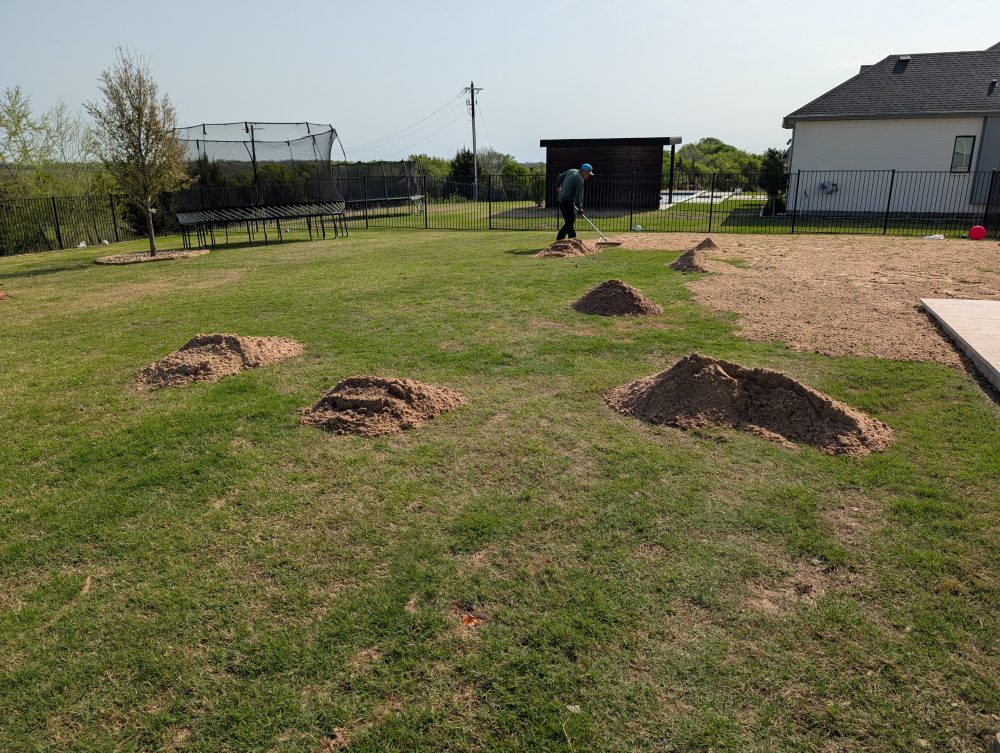
Why Lawns Become Uneven in the First Place
Before any leveling happens, it’s worth understanding what caused the problem. Uneven lawns rarely appear for just one reason. Soil settlement is a major contributor, especially in newer construction where the ground beneath the surface is still compacting. Thatch buildup, burrowing animals, tree root growth, freeze and thaw cycles, and poor irrigation practices can all create the peaks and valleys that make a lawn look and function poorly.
Here’s where DIY efforts often go wrong from the very start: if you don’t correctly identify the cause of the unevenness, you’re essentially treating a symptom rather than the problem. Covering a low spot with topsoil when that low spot is caused by an underground drainage issue will give you a temporary visual fix and a much bigger problem come the next heavy rain.
The Soil Matching Problem
One of the most overlooked challenges in DIY lawn leveling is soil compatibility. Your existing lawn has a specific soil composition that your grass has adapted to over time. When homeowners add topsoil or a sand mixture from a local hardware store, that material may have a completely different texture, drainage rate, and nutrient profile. Research from turfgrass management programs consistently shows that mismatched soil layers create what’s called a “perched water table,” where moisture gets trapped at the boundary between two different soil types instead of draining properly. This can suffocate grass roots and create exactly the kind of wet, compacted areas you were trying to eliminate.
Burying the Crown
Grass plants have a crown, which is the growing point located just at or slightly above the soil surface. Bury that crown even a half inch too deep, and the grass in that area will die off within weeks. In a professional leveling project, maintaining the correct soil depth relative to existing grass crowns is one of the most technically demanding parts of the work. Without experience and the right equipment, it’s very easy to add too much material in certain spots, leaving you with dead patches that then need to be reseeded, watered, and babied for the remainder of the season.
What “Leveling” Actually Requires
A proper lawn leveling project involves more than a wheelbarrow and a rake. It starts with a thorough assessment of the yard’s drainage patterns and existing soil conditions. Professionals use equipment that most homeowners simply don’t own, including laser levels, specialized spreaders, and in some cases, core aeration equipment that needs to be run before any topdressing is applied. Skipping the aeration step is one of the most common DIY mistakes. Aeration opens up the soil so that the leveling material can make genuine contact with the root zone rather than sitting on top of a compacted surface that won’t absorb it properly.
The Timeline Factor
Timing matters enormously in lawn leveling. The work should happen during the active growing season for your specific grass type, and it should be followed by consistent irrigation for several weeks. Many homeowners take on leveling projects in the fall or during drought conditions, which dramatically reduces the chances of successful grass recovery. A lawn care professional will factor in the current condition of your grass, the forecast, and the time of year before beginning any work, which is a level of planning that’s hard to replicate when you’re squeezing a project into a free weekend.
When Professional Help Pays for Itself
A failed DIY leveling attempt rarely leaves you back where you started. It frequently leaves you in a worse position, with dead patches, drainage problems that have been inadvertently redirected, and a soil profile that’s now even harder to work with. The cost of correcting a DIY gone wrong is almost always higher than the cost of doing it right the first time.
Accurate Lawn Leveling has worked with enough frustrated homeowners to say confidently that a professional assessment before you start is always worth it. Even if you ultimately decide to proceed on your own, knowing what you’re actually dealing with beneath the surface, what soil products are compatible with your lawn, and what the drainage map of your yard looks like will dramatically improve your chances of success.
Your lawn is one of your home’s most visible features, and it deserves a thoughtful approach. Reach out to Accurate Lawn Leveling today for a consultation, and find out what a genuinely level yard can look like.