
French Drain Types: Which One Is Right for Your Yard?
If you live in Dallas, Houston, or anywhere across Oklahoma, you already know what a relentless rainstorm can do to your yard. Water pools near the foundation, the lawn turns to a muddy mess, and that nagging worry about structural damage starts to creep in. At Accurate Lawn Leveling, we have spent years helping homeowners throughout these communities protect their properties from exactly these kinds of drainage problems. Our team brings deep regional knowledge, hands-on experience, and a genuine commitment to doing the job right, whether we are grading a backyard in The Woodlands, addressing foundation runoff near Nichols Hills, or solving chronic pooling issues in a neighborhood close to White Rock Lake. One of the most effective tools in our drainage toolkit is the French drain, and understanding the different types available can help you make a confident, informed decision about what your property truly needs.
Why French Drains Matter for Texas and Oklahoma Homeowners
The soil beneath homes in Dallas, Houston, and Oklahoma presents a particular challenge. In some parts of Dallas, expansive clay soil can change its volume by as much as 30 to 75 percent depending on moisture levels. That constant swelling and shrinking puts serious pressure on foundations, driveways, and landscaping. Houston’s expansive clay soil swells when wet and shrinks when dry, and that constant movement puts lateral pressure on slab foundations and causes differential settling. Oklahoma faces a similar reality. Many soils in Oklahoma have little sand content, and the soil structure does not hold together when wet, meaning drainage problems can compound quickly during heavy rainfall events.
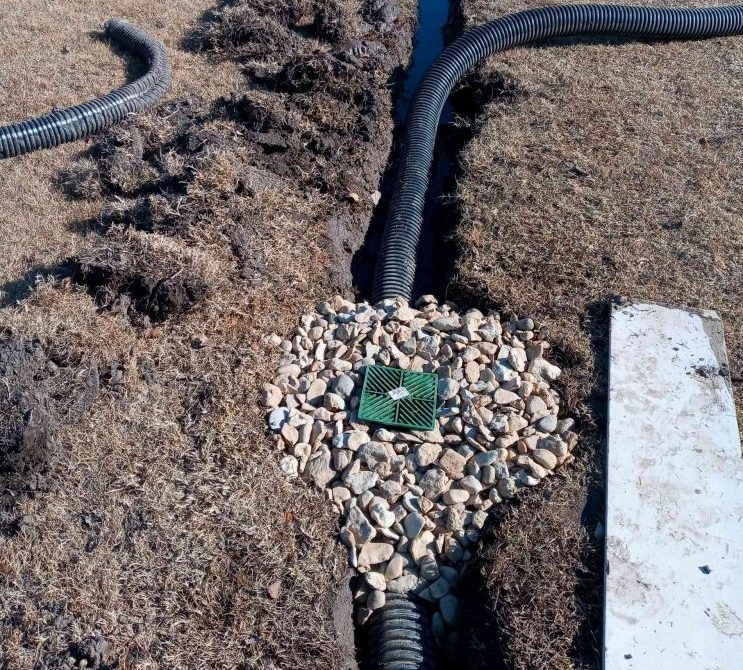
A French drain is one of the most time-tested solutions for redirecting this excess water before it causes lasting damage. A French drain is a gravel-filled trench that includes a perforated or slotted pipe, and while you hardly see it once installed, its role is essential to protecting your home from water damage. The key, though, is choosing the right type for your specific situation. Using the wrong system can leave you with the same problems you started with, while the right one can protect your home for decades to come. A French drain can last 20 to 30 years when properly installed and maintained.
The Main Types of French Drains (and When You Need Each One)
Not every French drain is built the same way or designed to solve the same problem. Here is a breakdown of the primary types and the situations where each one excels.
Exterior French Drains (Foundation Perimeter Drains)
Exterior French drains are installed around the home’s exterior foundation to intercept groundwater before it reaches the basement, preventing the buildup of hydrostatic pressure. This is one of the most common systems we install for Dallas and Houston homeowners dealing with chronically wet soil near the house. A French drain works to keep your basement dry by diverting water from the surrounding soil into an underground barrier trench containing a gravel bed, because water will always seek the path of least resistance. For properties sitting on clay-heavy soil, where water clings to the ground rather than absorbing naturally, this system can be genuinely transformative.
Interior French Drains
Interior French drains are installed around the basement or foundation walls and drain water outside, making them best suited for basements that flood frequently and homes that often endure severe weather. While less common in the slab-foundation construction typical across Texas and Oklahoma, they become relevant for older homes with crawl spaces or partially below-grade living areas.
Surface French Drains (Blind Drains)
Blind French drains help protect driveways or yards that flood frequently by intercepting water at or just below the surface before it accumulates. These are shallow systems, typically installed in low spots, alongside fence lines, or in areas where water tends to settle after rain. They are particularly popular throughout the Houston area, where flat terrain prevents natural runoff and heavy rainfall quickly overwhelms shallow yards.
Trench Drains (Channel Drains)
Trench drains are a surface-level cousin to the traditional French drain. Trench drains work best for managing rainfall, irrigation runoff, and other surface water that accumulates on hard surfaces like driveways, patios, pool decks, and walkways. If water is sheeting across your concrete after a storm rather than seeping into the soil, a trench drain with a grated channel is often the right choice.
Curtain Drains
A curtain drain is a type of exterior French drain installed across a slope to intercept water flowing downhill toward your home or a low-lying area of the yard. French drains are an excellent solution for draining soggy ground over a large area, and homeowners may also choose them for hillsides or areas of higher elevation to direct runoff water away from the property. In hilly Oklahoma neighborhoods and in areas where storm runoff from a neighbor’s yard drains through yours, a curtain drain can solve a problem that simpler systems cannot.
How to Tell Which French Drain You Actually Need
Before calling any contractor, it helps to do one simple thing: walk your yard right after a heavy rain. Pay attention to where water collects, how long it lingers, and whether it pools close to your foundation. Here are a few practical guidelines.
If water pools in specific low spots away from the house, a surface French drain or blind drain is likely your best starting point. If water is consistently gathering against your foundation walls or the soil right next to your slab stays saturated for long periods, an exterior perimeter drain is worth serious consideration. If water is pooling within 10 feet of the house and hasn’t drained within 30 minutes after rain stops, that is a problem worth addressing before it becomes a foundation problem. If the issue is water running across hard surfaces like a driveway or patio, a trench drain is probably the most practical fix. And if your yard sits downhill from neighboring properties, a curtain drain positioned across the slope can intercept that runoff before it ever reaches your lawn.
That said, many yards in Dallas, Houston, and Oklahoma need more than one type of system working together. Although some drainage types will solve a problem on their own, they are often used in combination for a complete yard drainage system. A proper site assessment by an experienced professional makes all the difference in getting this right the first time.
What Sets a High-Quality French Drain Installation Apart
Not all French drains are installed the same way, and the difference in quality shows up over time. At Accurate Lawn Leveling, we pay close attention to the details that determine long-term performance.
Proper slope is non-negotiable. A French drain that does not maintain consistent grade will allow water to pool inside the pipe rather than flowing to the outlet. The right gravel matters too. Washed gravel is important because it allows water to percolate quickly and does not contain stone dust that would reduce flow. Filter fabric wrapped around the gravel and pipe prevents fine soil particles from migrating into the system over time and causing clogs. And the outlet location has to be chosen carefully, directing water toward a storm drain, dry well, or another safe discharge point well away from the home.
We also account for the specific soil conditions in each service area. The thick clay that defines so much of the DFW Metroplex, the black gumbo soil that Houston homeowners contend with, and the variable clay and silt content across central Oklahoma all respond differently to drainage systems. That regional knowledge shapes every decision we make from planning through installation.
Protecting Your Investment for the Long Term
A well-installed French drain is a low-maintenance solution, but it is not a zero-maintenance one. Periodic inspection of the outlet point, keeping vegetation and tree roots clear of the drain path, and occasionally flushing the system with a garden hose will help extend its effective life considerably. French drains generally need less frequent maintenance than trench drains but do require professional service when problems like sediment buildup or root intrusion occur.
The bigger picture here is property protection. According to the American Society of Civil Engineers, expansive soils cause more financial damage to structures in the U.S. each year than floods, hurricanes, tornadoes, and earthquakes combined. For homeowners in Dallas, Houston, and Oklahoma, where clay soil is a defining feature of the landscape, proactive drainage management is one of the smartest investments you can make.
At Accurate Lawn Leveling, we believe every homeowner deserves a clear explanation of their options, an honest assessment of what their property needs, and workmanship they can count on for years to come. We are proud to serve communities across Dallas, Houston, and Oklahoma with the kind of personalized attention that big-box contractors simply cannot provide.
Ready to stop watching your yard flood and start protecting your home?
Visit our contact page to get in touch with the Accurate Lawn Leveling team. We will assess your drainage situation, walk you through the right solution for your property, and give you a straight answer about what it will take to fix it for good.