
When to Replace a French Drain
Signs Your French Drain Needs Replacement Before Water Damage Gets Worse
A properly installed French drain is one of the most effective ways to protect your property from standing water, foundation issues, and landscape erosion. However, like any drainage system, it will not last forever. Over time, sediment buildup, root intrusion, shifting soil, and aging materials can reduce its effectiveness. Knowing when a simple repair will solve the problem and when it’s time for a complete replacement can save you from costly water damage.
At Accurate Lawn Leveling, we help homeowners throughout Dallas, Houston, and Oklahoma solve drainage problems with customized French drain installations and lawn grading solutions. Our team understands the unique challenges of expansive clay soils, heavy seasonal rainstorms, and shifting ground conditions common throughout the region. We focus on long-term solutions instead of temporary fixes, helping homeowners protect their lawns, landscaping, and foundations for years to come. Whether you’re noticing soggy spots after every storm or wondering if your aging drainage system is still doing its job, understanding the warning signs is the first step toward a healthier, drier property.
Why French Drains Eventually Stop Working
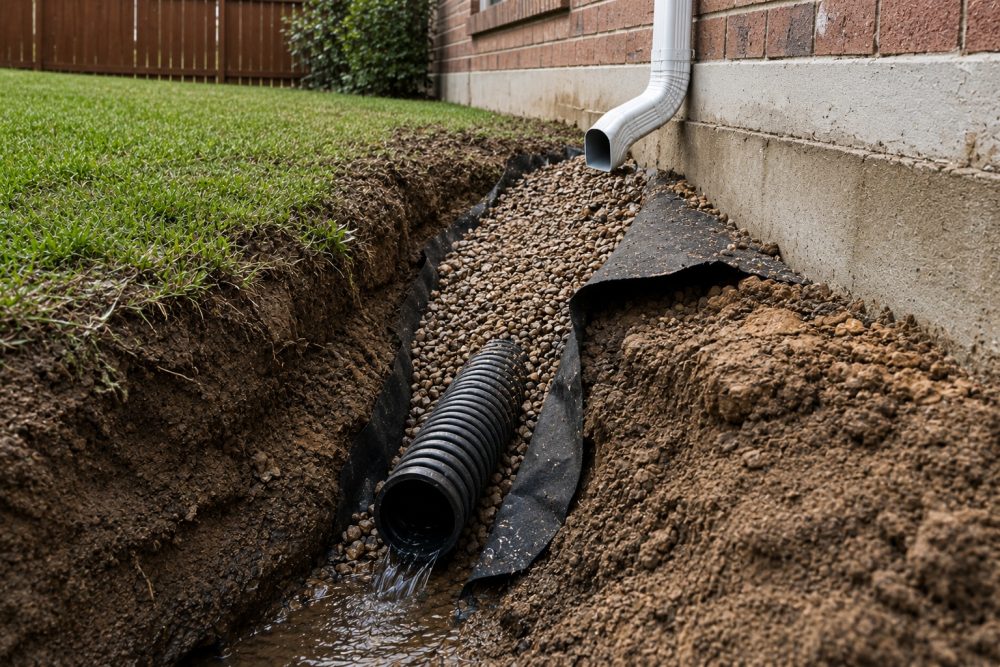
French drains are designed to collect underground water through a perforated pipe surrounded by gravel and filter fabric. Water flows into the pipe and is carried safely away from your yard and foundation.
While many professionally installed French drains can last 30 to 40 years, their lifespan depends heavily on installation quality, soil conditions, and routine maintenance. In areas with heavy clay soils, like much of North Texas, Houston, and parts of Oklahoma, sediment and shifting soil can shorten that lifespan if the system is not properly designed.
Several factors commonly contribute to failure:
Sediment and Soil Clogging
Over time, fine soil particles can enter the gravel bed and pipe, reducing water flow. Once enough sediment accumulates, the drain may no longer move water efficiently.
Tree Root Intrusion
Tree roots naturally seek moisture. A French drain provides a consistent water source, making it attractive to nearby root systems that can block or crush drainage pipes.
Pipe Damage
Older corrugated pipes may crack, collapse, or shift due to soil movement. Expansive clay soils, common throughout Dallas, Houston, and Oklahoma, place additional pressure on underground drainage systems as they repeatedly expand during wet weather and shrink during dry periods.
Improper Installation
A French drain installed without the correct slope, proper filter fabric, or adequate outlet location may never perform correctly, regardless of its age.
Common Warning Signs Your French Drain Is Failing
Many drainage problems develop slowly. Recognizing these symptoms early can help prevent foundation damage and costly landscape repairs.
Standing Water Returns After Rain
If puddles begin appearing in areas that previously drained well, your French drain may no longer be moving water effectively.
Soggy Lawn That Never Dries
Persistent wet spots often indicate underground water is no longer reaching the drainage pipe.
Water Pooling Near the Foundation
One of the primary purposes of a French drain is protecting your home’s foundation. If water starts collecting around the base of your home, immediate inspection is recommended.
Erosion Around Landscaping
Poor drainage can wash away mulch, soil, and decorative landscaping features during heavy storms.
Drain Outlet Has Little or No Water Flow
During heavy rainfall, you should typically see water exiting the drain outlet. Little or no discharge during significant rain can signal a blockage somewhere in the system.
Can a French Drain Be Repaired?
Not every drainage issue requires complete replacement.
Many problems can be corrected through targeted maintenance or repairs, including:
- Professional drain cleaning
- Hydro jetting to remove sediment
- Root removal
- Replacing damaged pipe sections
- Restoring blocked drain outlets
If the overall system remains structurally sound, repairs can often restore proper performance.
However, repeated repairs may become less cost effective if the drainage system is aging or was improperly installed from the beginning.
When It’s Time for a New French Drain
Sometimes replacing the entire drainage system is the smartest investment.
Replacement is often recommended when:
The Drain Frequently Clogs
If your French drain requires repeated cleaning every year or two, the underlying design may no longer meet your property’s drainage needs.
The Pipe Has Collapsed
Collapsed or crushed pipe sections often require excavation. If multiple sections have failed, replacement is usually more practical than piecemeal repairs.
The Gravel Bed Is Completely Saturated
Over decades, sediment can fill the gravel surrounding the pipe. Once this occurs, water can no longer filter efficiently into the system.
Your Property Has Changed
New patios, retaining walls, pools, landscaping, or home additions may alter water flow patterns. An older French drain may no longer provide adequate drainage for the updated property.
You Continue Experiencing Foundation or Drainage Issues
Recurring drainage problems despite previous repairs often indicate the existing system is undersized, improperly graded, or simply worn out.
Why Local Soil Conditions Matter
Homeowners across Dallas, Houston, and Oklahoma face unique drainage challenges compared to many other parts of the country.
North Texas and much of Oklahoma contain expansive clay soils that absorb water slowly and expand dramatically during wet periods. Houston experiences frequent heavy rainfall and high groundwater levels that can overwhelm aging drainage systems.
These conditions make professional design especially important. A properly installed French drain should work together with correct lawn grading, downspout management, and surface drainage to move water safely away from your home. Experts note that many drainage issues in Texas stem from the combination of heavy clay soils and improper grading, making a complete drainage strategy more effective than relying on a single solution.
How Accurate Lawn Leveling Solves Drainage Problems
Every property has unique drainage patterns, which is why we never rely on one-size-fits-all solutions.
Our process includes:
- Comprehensive drainage inspection
- Identification of water flow patterns
- Lawn grading evaluation
- Customized French drain design
- Professional installation using quality materials
- Final testing to ensure proper water movement
When needed, we combine French drains with lawn leveling and grading improvements to maximize long-term performance and help reduce future maintenance.
Protect Your Property Before Small Drainage Problems Become Major Repairs
A failing French drain rarely fixes itself. Small warning signs today can eventually lead to foundation movement, landscape erosion, standing water, and expensive structural repairs. Whether your system needs professional cleaning, targeted repairs, or complete replacement, taking action early can help protect your investment.
Accurate Lawn Leveling proudly serves homeowners throughout Dallas, Houston, and Oklahoma with dependable drainage solutions designed for local soil conditions and weather patterns. If you’re noticing signs that your French drain isn’t performing like it should, contact us through our Contact Page to schedule a professional evaluation and learn about the best solution for your property.