
Retaining Wall Materials Compared: Best Choice for Your Property
Best Retaining Wall Materials for Long-Lasting Strength and Curb Appeal
Retaining walls do much more than enhance the appearance of your landscape. They help prevent soil erosion, manage drainage issues, create usable outdoor space, and protect your property from costly damage. For homeowners and businesses throughout Dallas, Houston, and Oklahoma, selecting the right retaining wall material is especially important due to the region’s varying soil conditions, heavy rainfall events, and periods of extreme heat.
At Accurate Lawn Leveling, we understand that every property presents unique challenges. Our team specializes in grading, drainage solutions, and retaining wall installation designed to withstand local conditions while complementing your landscape. We take a customer-focused approach, helping property owners understand their options and choose solutions that provide lasting value. Whether you’re dealing with a sloped yard in Dallas, drainage concerns in Houston, or erosion issues in Oklahoma, selecting the right retaining wall material can make a significant difference in both performance and appearance. This guide compares the most popular retaining wall materials, highlighting their strengths, limitations, and ideal applications to help you make an informed decision.
Why Choosing the Right Retaining Wall Material Matters
The material you choose affects your retaining wall’s durability, maintenance requirements, cost, and overall appearance. A retaining wall must withstand the pressure of soil, water, and changing weather conditions for many years.
In North Texas, expansive clay soils can shift significantly during dry and wet cycles. Houston’s frequent storms and heavy rainfall can create drainage challenges, while Oklahoma properties often experience erosion from strong winds and seasonal weather changes. These regional factors make material selection especially important.
Industry experts consistently emphasize that proper drainage and quality materials are key factors in retaining wall longevity. A well-designed wall built with suitable materials can provide decades of reliable performance while improving property value.
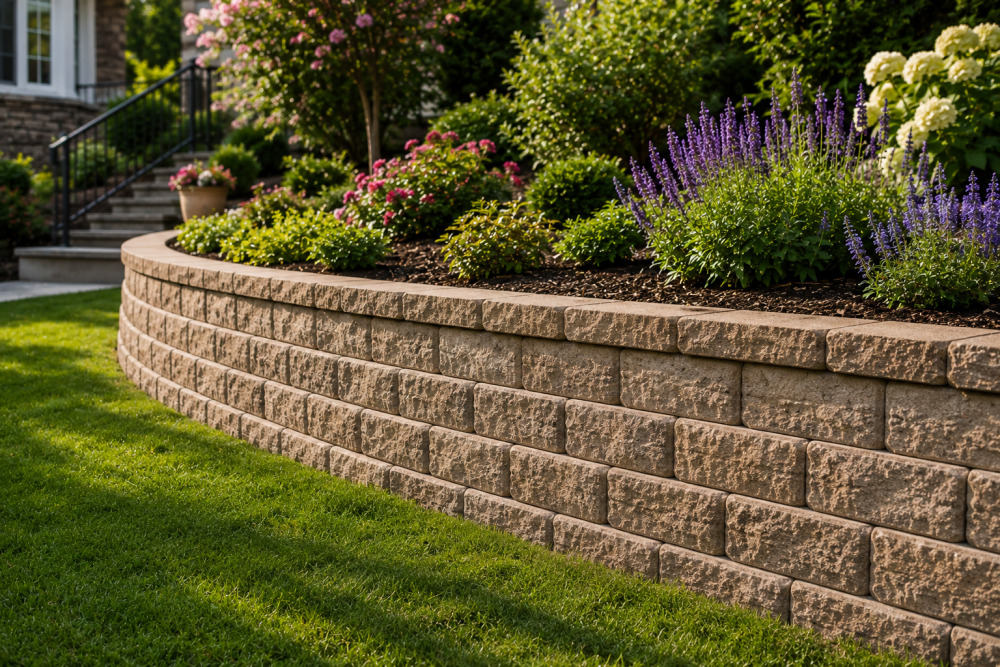
Concrete Block Retaining Walls: Durable and Versatile
Concrete blocks are among the most popular retaining wall materials used today. These engineered blocks are designed specifically for retaining wall construction and offer excellent strength and flexibility.
Benefits of concrete block retaining walls include:
- High durability and structural integrity
- Wide range of colors, textures, and styles
- Resistance to rot, insects, and weather damage
- Relatively low maintenance requirements
- Suitable for both residential and commercial applications
Concrete block walls are particularly effective for properties in Dallas and Oklahoma where soil movement can place stress on structures. Modern interlocking systems help distribute pressure and improve stability.
One consideration is that professional installation is essential. Proper base preparation, drainage systems, and construction techniques play a critical role in long-term performance.
Natural Stone Retaining Walls: Timeless Beauty and Strength
Natural stone remains a favorite choice for homeowners seeking a premium, upscale appearance. Materials such as limestone, sandstone, and fieldstone create a unique look that blends naturally into the landscape.
Advantages of natural stone include:
- Exceptional visual appeal
- Long lifespan when properly installed
- Natural resistance to weathering
- Increased property value
- Unique appearance with no two walls exactly alike
Natural stone works particularly well for luxury landscapes throughout areas such as Frisco, Plano, The Woodlands, and upscale Oklahoma communities where aesthetics are a top priority.
However, stone walls often require a larger investment due to material costs and labor-intensive installation. The finished result, though, can become a defining feature of the property for generations.
Timber Retaining Walls: Affordable and Natural Looking
Timber retaining walls offer a rustic appearance that complements many residential landscapes. Pressure-treated wood is commonly used to improve durability and resistance to decay.
Benefits of timber retaining walls include:
- Lower initial installation cost
- Natural appearance
- Faster construction timeline
- Suitable for smaller retaining projects
Timber can be an excellent option for garden beds, landscape terraces, and low-height retaining walls. Homeowners often choose wood when working within a limited budget.
Despite these advantages, timber generally has a shorter lifespan compared to concrete or stone. The hot summers and moisture fluctuations common throughout Dallas, Houston, and Oklahoma can accelerate wear over time. Regular maintenance and inspections are important to maximize longevity.
Poured Concrete Retaining Walls: Modern and High Strength
Poured concrete walls are known for their strength and clean, contemporary appearance. They are commonly used in applications where significant structural support is required.
Advantages include:
- Exceptional load-bearing capacity
- Clean, modern aesthetic
- Customizable shapes and designs
- Long-term durability
Poured concrete is often selected for steep slopes, commercial properties, and locations where space is limited. Since the wall can be engineered to specific requirements, it provides flexibility for complex projects.
One drawback is that cracks may develop over time if the wall is not properly designed or if soil movement occurs. Professional engineering and installation are essential for optimal results.
How to Determine the Best Material for Your Property
Choosing the right retaining wall material depends on several factors:
Budget
Concrete block and timber options generally offer lower upfront costs, while natural stone tends to be more expensive.
Property Conditions
Soil type, drainage patterns, wall height, and slope severity all influence material selection.
Appearance Goals
Some homeowners prioritize natural beauty, while others prefer a modern or highly structured look.
Maintenance Expectations
Concrete and stone typically require less maintenance than wood.
Longevity
If you’re seeking a long-term investment, concrete block, poured concrete, and natural stone often provide the greatest lifespan.
At Accurate Lawn Leveling, we conduct a thorough site evaluation before recommending a retaining wall solution. This allows us to identify drainage concerns, soil conditions, and structural requirements unique to your property.
Why Professional Installation Makes a Difference
Even the highest-quality materials can fail if a retaining wall is improperly installed. Drainage systems, foundation preparation, soil compaction, and structural design all contribute to long-term success.
Many retaining wall failures occur because water builds up behind the wall, creating excessive pressure. Professional installation includes proper drainage solutions that help protect both the wall and surrounding landscape.
Our team combines expertise in grading, drainage, and retaining wall construction to create solutions that are both attractive and durable. By addressing the root causes of erosion and drainage issues, we help property owners protect their investment for years to come.
Ready to Choose the Right Retaining Wall for Your Property?
Whether you’re considering concrete block, natural stone, timber, or poured concrete, the right retaining wall can transform your landscape while protecting your property from erosion and drainage problems. Accurate Lawn Leveling proudly serves homeowners and businesses throughout Dallas, Houston, and Oklahoma with customized retaining wall and drainage solutions designed for local conditions.
Visit our contact page today to schedule a consultation and discover which retaining wall material is the best fit for your property.