
How Can I Tell if My Lawn Is Becoming Uneven Before It Gets Worse?
Early signs of an uneven lawn include small dips or raised areas, recurring puddles, mower scalping, thinning grass, exposed roots, and areas that feel soft or unstable underfoot. Catching these changes early is important because minor soil settlement, compaction, erosion, or drainage problems can gradually develop into larger depressions and more difficult lawn repairs.
Accurate Lawn Leveling has helped homeowners and businesses throughout Dallas, Houston, and Oklahoma City create smoother, healthier, more functional lawns for more than 30 years. We know that lawn unevenness rarely appears overnight. Small changes in grade, soil density, drainage, and turf health often provide clues long before a yard develops obvious bumps or deep low spots. Our approach considers more than appearance. We look at how water moves across the property, how the soil has settled, and how the turf responds. Identifying the cause early can make it easier to choose an appropriate solution instead of waiting until the lawn becomes uncomfortable to walk on, difficult to mow, or prone to standing water.
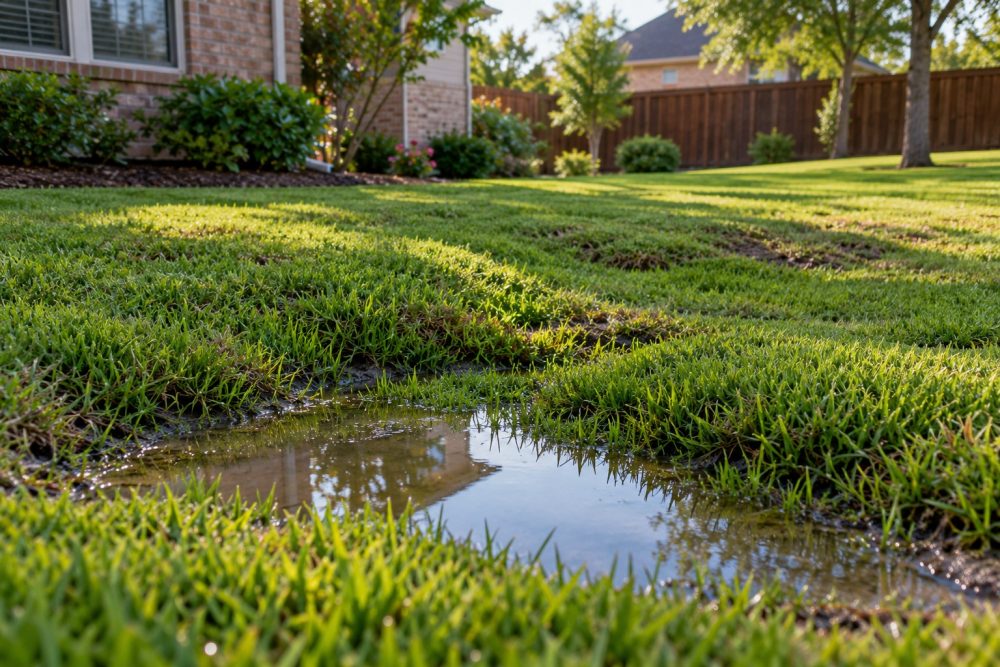
Warning Signs Your Lawn May Need Leveling
A lawn does not have to look dramatically uneven to have a developing grade problem. Some of the earliest signs show up during mowing, watering, or walking across the yard.
Homeowners in Dallas, Houston, and Oklahoma should periodically inspect their lawns, especially after heavy rainfall, construction, landscaping work, or significant dry periods.
What Are the First Signs of an Uneven Lawn?
Small depressions and raised areas are often the earliest physical clues. Walk slowly across your lawn and pay attention to changes you can feel beneath your feet, even if they are difficult to see.
Common warning signs include:
- Small dips that collect rain or irrigation water
- Raised ridges or bumps in the turf
- Areas that feel unusually soft or sunken
- Grass that appears lower than surrounding turf
- Soil or roots becoming exposed in certain spots
- New areas where water flows or collects after rainfall
- Spots where a mower suddenly cuts much shorter than elsewhere
One easy test is to look across the lawn from a low angle instead of standing directly above it. Shadows and changes in turf height can make subtle depressions easier to identify.
Why Does My Mower Keep Scalping Certain Parts of the Yard?
Repeated mower scalping in the same locations can indicate high spots or abrupt changes in the lawn surface. When mower wheels travel through a depression or across a raised area, the blade may suddenly sit closer to the grass.
Do not automatically assume the mower deck is the problem if scalping repeatedly happens in specific areas. Inspect the ground beneath those spots.
Texas A&M AgriLife Extension recommends following the “one-third rule,” which means removing no more than one-third of the grass leaf tissue during a mowing. Grass that suddenly appears brown after mowing may have been cut too low. If this occurs only in isolated areas despite a properly adjusted mower, uneven terrain may be contributing to the problem.
Does Standing Water Mean My Lawn Is Uneven?
Recurring standing water is one of the most useful clues that a lawn’s grade or drainage deserves attention. A puddle after an intense storm does not automatically mean a yard needs leveling, but water repeatedly collecting in the same depression can indicate a low spot, poor infiltration, or both.
Soil conditions matter too. Texas A&M AgriLife notes that clay soils hold water and allow less air into the soil than well-draining soils. It also reports that compacted or clay soils are more prone to irrigation runoff.
Oklahoma State University similarly explains that clay content and improper grading can contribute significantly to landscape drainage problems. Very flat areas without effective drainage design are particularly susceptible.
That distinction matters because simply filling a puddle may not correct the underlying water-flow problem.
What Causes a Previously Level Lawn to Become Bumpy?
Uneven lawns commonly develop because soil moves, settles, compacts, erodes, or responds differently to changing moisture conditions.
Possible causes include:
- Soil settlement after construction or utility work
- Heavy foot or equipment traffic
- Poor drainage
- Erosion and runoff
- Burrowing animals
- Tree-root growth
- Improperly filled trenches
- Repeated wet and dry soil cycles
- Changes made during landscaping or hardscape installation
Compaction is especially important to watch. Oklahoma State University explains that compaction reduces pore space in soil, which can decrease air movement, root growth, and water infiltration. The university also notes that moist soil can be particularly susceptible to compaction.
For newer properties, construction activity deserves extra attention. Oklahoma State University specifically identifies new builds as situations where construction equipment can compact soil and create physical barriers that restrict root growth.
Why Early Lawn Leveling Problems Matter in Dallas, Houston, and Oklahoma
Local soil and weather conditions can make small grading problems more noticeable over time. Texas contains soil types ranging from sandy material to heavy clay, and Texas A&M AgriLife notes that clay soils tend to hold more water and drain less readily.
Oklahoma homeowners face similar concerns. Oklahoma State University notes that many Oklahoma soils have limited sand content and that clayey soils can infiltrate water slowly.
These conditions mean a small depression may affect more than appearance. It can influence runoff, mowing, turf performance, and how comfortably the lawn can be used.
Proper grading is particularly important near structures. Oklahoma State University’s guidance for establishing lawns recommends at least a 1 percent slope away from buildings to help prevent water from settling around them.
How Can I Check My Lawn for Unevenness at Home?
The best time to inspect a lawn is both when it is dry and shortly after rainfall. Dry conditions make bumps and depressions easier to feel, while rainfall reveals how water actually moves.
Try this simple inspection:
- Walk the entire lawn slowly. Note dips, bumps, soft areas, and abrupt changes in elevation.
- Watch your mower. Mark locations where it repeatedly scalps or bounces.
- Inspect after rain. Photograph areas where water remains after the surrounding lawn has drained.
- Look at the turf. Watch for thinning grass, exposed roots, or stressed areas that correspond with low or high spots.
- Check near the house. Pay particular attention to areas where the ground appears to slope toward the foundation.
- Compare changes over time. Taking photos from the same locations every few months can help reveal gradual settlement.
The key is consistency. One isolated puddle or thin patch does not prove that leveling is necessary. Multiple recurring symptoms in the same area are a stronger reason to have the grade and drainage evaluated.
Frequently Asked Questions About Uneven Lawns
Will an uneven lawn fix itself?
Usually not. Minor soil movement may stabilize, but established depressions, drainage problems, and significant high spots generally do not disappear simply because grass grows over them.
Can I just add soil to low spots in my lawn?
Small imperfections may sometimes be corrected with appropriate topdressing, but deeper or drainage-related depressions should be evaluated first. Adding material without understanding where water needs to flow can unintentionally redirect runoff toward another part of the property.
When should I worry about standing water in my yard?
Recurring water in the same location deserves attention, particularly when it remains long after nearby areas drain or occurs close to the house. The cause may involve the lawn’s grade, compacted soil, drainage limitations, or a combination of factors.
Is aeration the same as lawn leveling?
No. Aeration is intended primarily to reduce soil compaction and improve movement of air and water through the root zone. Lawn leveling addresses variations in the surface elevation of the yard, although aeration and topdressing can sometimes be complementary parts of lawn improvement. Oklahoma State University notes that aerification can reduce compaction and improve water infiltration.
Catch Lawn Unevenness Before It Becomes a Bigger Problem
A lawn does not need deep holes or obvious slopes before it deserves attention. Small dips, mower scalping, recurring puddles, soft areas, and changes in drainage can all be early warnings that the surface is becoming uneven.
Accurate Lawn Leveling provides professional lawn leveling and drainage solutions for residential and commercial properties throughout Dallas, Houston, and Oklahoma City. With more than 30 years of experience, the company focuses on creating lawns that are smoother, healthier, and better able to perform as part of the property’s overall drainage system.
Noticing dips, bumps, or drainage changes in your yard? Do not wait for a minor uneven area to become a larger lawn or water-management problem. Contact Accurate Lawn Leveling for an evaluation and find out what your lawn needs for a smoother, more functional surface.